Romans - chapter 9 God's Purpose for Israel's Rejection


The Book of Romans
Chapter 9
Israel’s Rejection of Christ
9:1 I tell the truth in Christ, I am not lying, my conscience also bearing me witness in the Holy Spirit, 2 that I have great sorrow and continual grief in my heart. 3 For I could wish that I myself were accursed from Christ for my brethren, my countrymen according to the flesh, 4 who are Israelites, to whom pertain the adoption, the glory, the covenants, the giving of the law, the service of God, and the promises; 5 of whom are the fathers and from whom, according to the flesh, Christ came, who is over all, the eternally blessed God. Amen.
In deepest grief and sorrow, the Apostle Paul is speaking from his heart what are his true feelings. As God is His witness, swearing by the Holy Spirit, his heart is broken for His people - His Jewish brothers and sisters. He even goes so far as to write that he would be willing to be forever cursed—cut off from Christ for the sake of his people - if that could save them. His love for Israel and the pain of them rejecting Jesus was deep within him and always remained a part of his life.
The people of Israel had been God's chosen people in Whom God revealed His glory by making covenants and giving them His laws to live by. He gave them the privilege of worshiping Him and to be able to receive his wonderful promises.

Abraham, Isaac, and Jacob - their spiritual fathers were their ancestors, and Jesus, as a man came from their loins, being One of them. Jesus, as God, came from heaven to earth, leaving His divinity, but remains as God, the One Who rules over everything and is worthy of eternal praise! The apostle ended with the word "amen," which is a Hebrew word meaning "truly" or "so be it!" Today we may use the wording "so help me God," meaning I am telling the truth.
God’s Purpose Through Israel's Rejection
6 But it is not that the word of God has taken no effect. For they are not all Israel who are of Israel, 7 nor are they all children because they are the seed of Abraham; but, “In Isaac your seed shall be called.” 8 That is, those who are the children of the flesh, these are not the children of God; but the children of the promise are counted as the seed. 9 For this is the word of promise: “At this time I will come and Sarah shall have a son.”
Just because Israel has failed God in rejecting His Son, that does not mean that God has not kept His promise to Israel. God's promises are true no matter how Israel has failed God. Not everyone, however, who has been born into the nation of Israel belong to God. Just because they are a descendant of Abraham does not make them true children of of Abraham. Knowing that Abraham had another son, the Scriptures tell us that only Isaac is the son through whom Abraham's descendants will be counted as part of his seed. Only the children of promise then can be considered the children of God. For God said to Abraham, after Hagar had given birth to Ishmael, that His promise was He would return the next year and Sarah, his wife, would have a son. Abraham's seed would only come through Abraham and Sarah.
10. And not only this, but when Rebecca also had conceived by one man, even by our father Isaac 11 (for the children not yet being born, nor having done any good or evil, that the purpose of God according to election might stand, not of works but of Him who calls), 12 it was said to her, “The older shall serve the younger.” 13 As it is written, “Jacob I have loved, but Esau I have hated.”
To confirm even strong that the seed of Abraham was to be carried on down through Isaac - when Isaac married Rebekah, she gave birth to twins. Before they were born, God gave Rebekah a message that the older son will serve the younger. God's sovereign choice and purpose went against the custom of the Jews, in that normally the older of the twins would receive the blessing, God had chosen the younger to be the seed in which God's blessings would carry on. In that, the older son would serve the younger one. God's message was so strong in that He said He loved Jacob but hated Esau.The word "hate" is inconsistent with God's behavior. In the Jewish terms, the word "hate" simply is a relative term meaning "loved less,"
14 What shall we say then? Is there unrighteousness with God? Certainly not! 15 For He says to Moses, “I will have mercy on whomever I will have mercy, and I will have compassion on whomever I will have compassion.” 16 So then it is not of him who wills, nor of him who runs, but of God who shows mercy. 17 For the Scripture says to the Pharaoh, “For this very purpose I have raised you up, that I may show My power in you, and that My name may be declared in all the earth.” 18 Therefore He has mercy on whom He wills, and whom He wills He hardens.
Is God then unfair? Absolutely not. God’s mercy does not depend on human desire or effort—it depends solely on God. In fact, God said to Moses that He shows mercy to whom He chooses and has compassion on whomever He chooses. That is His sovereign decision.
The Word of God also tells us that He said to Pharaoh: “I raised you up for this very purpose, that I might display My power in you and that My name might be proclaimed in all the earth.” Therefore, it is God who chooses to show mercy to some and who hardens the hearts of others.
'
We must not interpret this portion of Scripture as supporting a Calvinistic view that God predestines some for heaven and others for hell. No—throughout Scripture, God affirms that He has given mankind free will: the ability to choose or reject Him and His ways. God is all-knowing (omniscient); He sees and knows the future of every person. Because of this, He works in the hearts and lives of people according to what He knows about their future. He can then show mercy or compassion to whomever He chooses. And because God is bound by His Word—He is not a liar—He acts in accordance with His truth and righteousness.
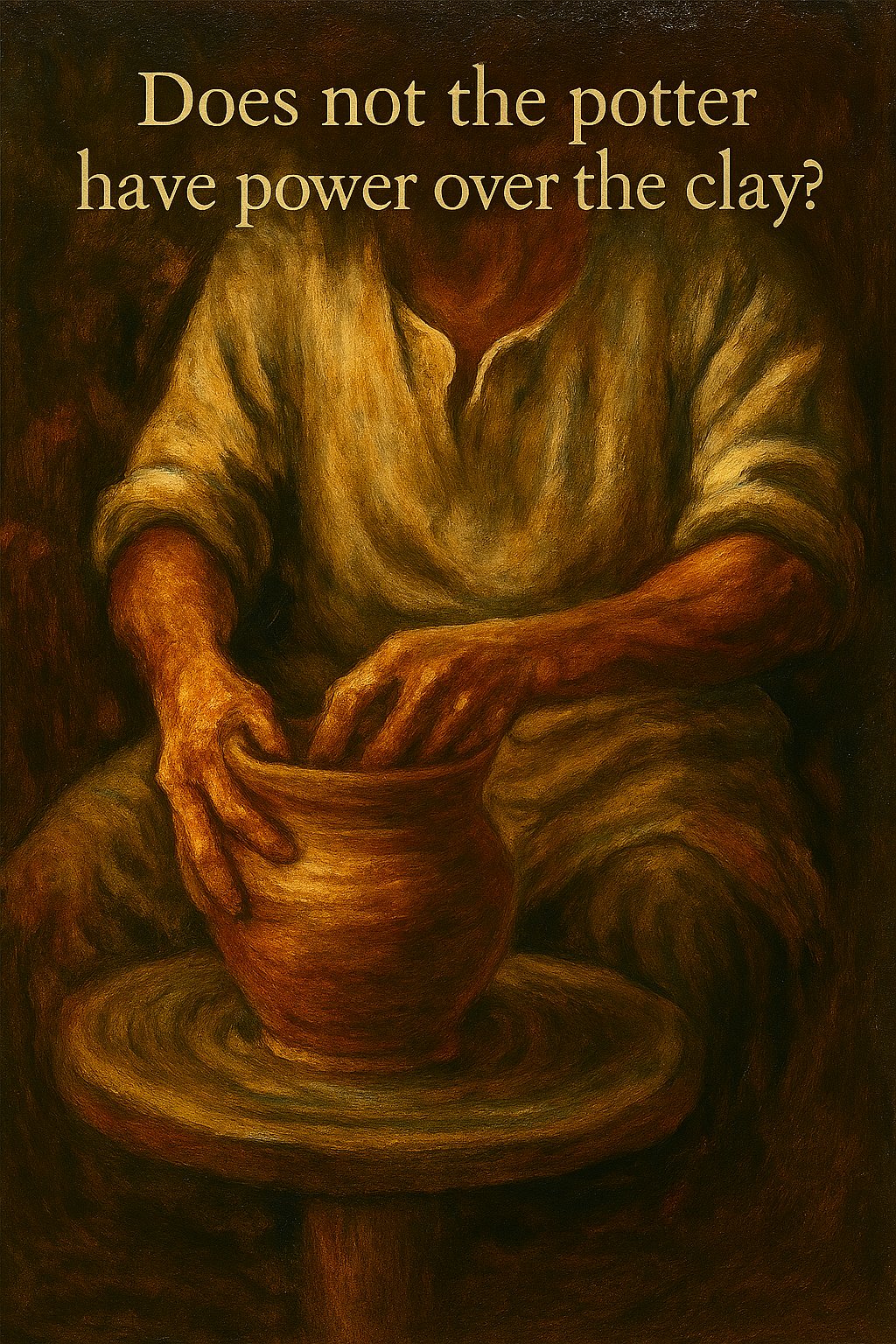
19 You will say to me then, “Why does He still find fault? For who has resisted His will?” 20 But indeed, O man, who are you to reply against God? Will the thing formed say to him who formed it, “Why have you made me like this?” 21 Does not the potter have power over the clay, from the same lump to make one vessel for honor and another for dishonor? 22 What if God, wanting to show His wrath and to make His power known, endured with much longsuffering the vessels of wrath prepared for destruction, 23 and that He might make known the riches of His glory on the vessels of mercy, which He had prepared beforehand for glory, 24 even us whom He called, not of the Jews only, but also of the Gentiles
Well then, you may wonder: “Why does God find fault with mankind? After all, who can resist God's choice? Haven’t they simply done what God made them do?” Who are we, as mere humans, to argue with God? Should the thing that was created say to the One who created it, “Why have you made me like this?”
Remember the potter who makes jars out of clay. Doesn’t he have the right to use the same lump of clay to make one jar for decoration and another for garbage? Now, what if God—though quite willing to demonstrate His anger and make known His power—patiently put up with people who deserved punishment and were ripe for destruction? In the same way, God has the right to show His anger and His power, being very patient with those on whom His anger falls, who are already destined for destruction. He does this to make the riches of His glory shine even brighter on those to whom He shows mercy—those who were prepared in advance for glory.
25 As He says also in Hosea: “I will call them My people, who were not My people,
And her beloved, who was not beloved.” 26 “And it shall come to pass in the place where it was said to them, ‘You are not My people,’ There they shall be called sons of the living God.”
The Apostle Paul continues to emphasize that God will act according to His sovereign will toward mankind—that is, within the boundaries of His Word. As God said in the Book of Hosea, speaking of the Gentile people, “Those who were not My people, I will now call My people. I will love those whom I did not love before.” They will be called sons of the living God.
27 Isaiah also cries out concerning Israel “Though the number of the children of be as the sand of the sea, The remnant will be saved. 28 For He will finish the work and cut it short in righteousness, Because the Lord will make a short work upon the earth.” 29 And as Isaiah said before: “Unless the Lord of Sabaoth had left us a seed, We would have become like Sodom,
And we would have been made like Gomorrah.”
Concerning Israel, the prophet Isaiah cried out: “Though the people of Israel are as numerous as the sands of the seashore, only a remnant will be saved. The Lord will carry out His sentence upon the earth quickly and without delay.” In another place, Isaiah said the same thing: “If the Lord of Hosts had not spared a few of our children, we would have been wiped out like Sodom and Gomorrah.”
30 What shall we say then? That Gentiles, who did not pursue righteousness, have attained to righteousness, even the righteousness of faith; 31 but Israel, pursuing the law of righteousness, has not attained to the law of righteousness. 32 Why? Because they did not seek it by faith, but as it were, by the works of the law. For they stumbled at that stumbling stone. 33 As it is written: “Behold, I lay in Zion a stumbling stone and rock of offense, And whoever believes on Him will not be put to shame.”
What does all this mean? Even though the Gentiles did not pursue righteousness by following God’s Laws as written down by Moses, they were now offered to be made right with God by faith - faith in Jesus Christ for their salvation. Sadly, most of Israel used the Law to elevate themselves to be in right standing with God instead of having faith in Him. Even though they knew their Messiah was prophesied under the Old Covenant many times over, they still chose to rely upon the Law instead of faith in God for their salvation. Because God foreknew their rebellion, He placed Jesus as a stumbling stone in which Israel rejected (Psalm 118:22). So when Jesus did come, Israel rejected Him. For those few who would trust in Jesus, however, God promised the He would not cause them to fall because they chose faith in Christ over Law.
Not only was Jesus the stumbling stone that the Jews rejected, Jesus was prophesied under the Old Covenant and confirmed in the New Covenant to be the cornerstone on which Christ and the Church was built upon.

Written by Pastor Joyce A. Erickson
Believers Bible School, Founder https://believersbibleschool.com/