Romans - chapter 4 Call the nonexistent into existence

The Epistle of Romans

Chapter 4


What a powerful chapter Romans 4 is for those who understand the rich theology and practical everyday usage for Christian living. It add so much fullness to our understanding of God's love for His people - all because of Jesus Christ. This is such a wonderful chapter in the Bible - so much that I ended spending extra time pondering over the richness of God's grace toward us who believe and trust in Jesus. I hope you enjoy this chapter as much as I did in preparing this chapter for you.
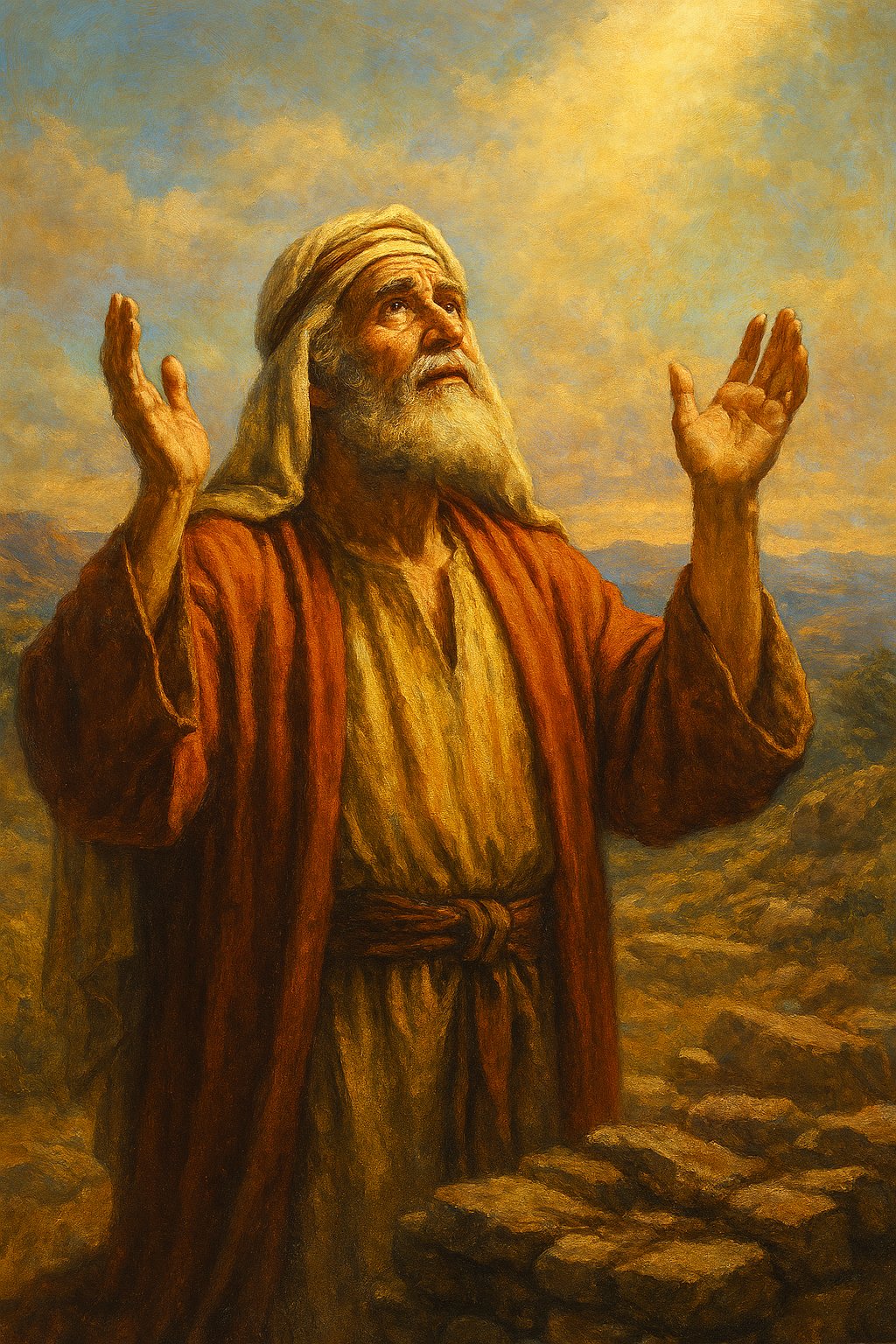
Abraham Justified by God through His Faith

 
1 What then shall we say that Abraham our father has found according to the flesh? 2 For if Abraham was justified by works, he has something to boast about, but not before God. 3 For what does the Scripture say? “Abraham believed God, and it was accounted to him for righteousness.” 
 
As the Apostle Paul writes primarily to a Gentile audience, he speaks of Abraham as "our" father in the faith according to the flesh, meaning he is the father of faith to both Jew and Gentile alike - all because of Christ Jesus. Could then the Old Testament Jews of yesteryear and even observant Jews of today claim favor with God because of the merits and deeds of Abraham as their own because of what Abraham did for God, or was it Abraham's faith in God that brought about the righteousness in him? 
 
Abraham, the forefather of our faith, and humanly speaking the founder of the Jewish nation, learned that being righteous before God was not by his own efforts. If his legal observances had made him acceptable to God, he would have had something to boast about. 
All those legalistic observances done would have made no difference in the eyes of God because that is not the ways of God. According to the Scriptures, Abraham learned that God so desires man to have faith and trust in Him, and that is what God counts as righteousness. So many people, including the observant Jews of yesteryear and even today, as well as Christians today want to get God's approval by observing legal customs or doing good deeds, hoping God would then approve of them. Again, that is not the ways of God. Any legal observance or good deeds then would be a result of following God in that faith and trust.
 
 
4 Now to him who works, the wages are not counted as grace but as debt. 5 But to him who does not work but believes on Him who justifies the ungodly, his faith is accounted for righteousness,
 
When people strive to work in an effort to please God for their salvation, their wages are no longer are a gift, but something they think they have earned. These people, in turn, believe God then owes them. Those, however, who do not strive to work in order to please God, but simply put their faith and trust in Him, God can turn even the ungodly person who earnestly comes to God righteous because of his or her faith and trust in Him. God then credits these people as righteous, belonging to Him. They are counted as righteous in God's eyes, not because of their work, but because of their faith in God who forgives sinners.
 
Ephesians 2:8-10
For by grace you have been saved through faith, and that not of yourselves; it is the gift of God, not or works, lest anyone should boast. For we are His workmanship, created in Christ Jesus for good works, which God prepared beforehand that we should walk in them.
 
People want to put the cart before the horse, thinking they must earn their salvation by good works. God's gift of salvation, however, is free to those who believe and put their faith and trust in Jesus Christ - in Who He is and what He has done for us. After believing, God then uses those who love, trust, and obey Christ to do good works, which in turn pleases God and pleases the obedient follower of Christ. The act of obedience then was not done by earning God's favor, but because we love and trust that the Lord knows whats best for our lives and how He uses us to accomplish His purpose through us. 
 
Trying to gain God's favor is a "religion."
Simple believing and trusting in God is a "relationship" with God.
True Christianity, therefore, is NOT a religion, but a relationship with God through Christ Jesus.

King David lived by faith in God

 6 just as David also describes the blessedness of the man to whom God imputes righteousness apart from works: 7 “Blessed are those whose lawless deeds are forgiven, And whose sins are covered; 8 Blessed is the man to whom the Lord shall not impute sin.”
 
In the same way, the blessings in which King David pronounces is on those whom God credits with righteousness apart from works or even legalistic observances. As He said "what joy and blessedness it is for those whose sins are forgiven - for they are covered and out of sight. For the Lord has cleared them of their sins to no longer be remembered."


Under the Old Covenant, the sins of God's people were covered. Under the New Covenant, because of our faith and trust in Jesus Christ, our sins are completely removed.

1 John 1:9 If we confess our sins, He is faithful and just to forgive us our sins and to cleanse us from all unrighteousness.
 

Abraham Was Justified Before Circumcision

 
9 Does this blessedness then come upon the circumcised only, or upon the uncircumcised also? For we say that faith was accounted to Abraham for righteousness. 10 How then was it accounted? While he was circumcised, or uncircumcised? Not while circumcised, but while uncircumcised. 11 And he received the sign of circumcision, a seal of the righteousness of the faith which he had while still uncircumcised, that he might be the father of all those who believe, though they are uncircumcised, that righteousness might be imputed to them also, 12 and the father of circumcision to those who not only are of the circumcision, but who also walk in the steps of the faith which our father Abraham had while still uncircumcised.
 
We've been saying that Abraham believed and it was counted unto him as righteous by God because of his faith. Is it then the blessing only for the Jews or is it also for the uncircumcised Gentiles? Circumcision was a sign that Abraham already had faith and out of trust in God's instruction, and an act of his obedience to God's request to that faith, Abraham performed circumcision. Circumcision then was an act of faith AND trust, having already become a sign that he was already righteous in God's eyes. God had already accepted him and declared him to be righteous—even before he was circumcised. 
 
As such, Abraham led the way for all people - the Jews first and then the Gentiles, to become our spiritual father because of faith - even before or whether or not we are circumcized. So must our faith be the same as Abraham's. In spite of or before any legal observance or works, God wants our faith and trust to be in Him.
 
Why then did God consider Abraham righteous in his faith before circumcision? To show all peoples - Jew or Gentile alike that it is only by faith do we come to God. It is not the legal observances or works that saves, but faith and trust in God. God then considers our faith and trust in Him as righteous.


Abraham Came Before the Law

 
13 For the promise that he would be the heir of the world was not to Abraham or to his seed through the law, but through the righteousness of faith. 
 
Abraham was born about 500 years before the giving of the Law to Moses - and even before there were the Israelites, who later became known as the Jews. For they all came out of the bosom of Abraham 400 years after his death - when the sons of Joseph went to Egypt to avoid the famine and ended up in slavery. Four hundred years later, that one family turned into a nation of God's people through the loins of Abraham. God then set them free through Moses, in which the giving of the Law was given to them while wandering through the wilderness for 40 years.
 
There was no giving of the Law for Abraham - for God was simply looking for a man who would believe - have faith and trust in Him to follow after Him. Because Abraham heard God and believed, God covenanted with him, promising him he would have his seed, as many as the sands of the sea throughout the whole earth, to follow after him - to those who would have faith.  
 
The promise to Abraham and his seed would be that he would inherit the "world." It does not say here the that promise to Abraham and his seed would be the Land of Israel. Simply put, the Greek word for "world" is "kosmos." Kittle's Theological Dictionary of the New Testament explains that the "world" here means "inhabited world," merging into the nations of the world.
 
Faith without or before works still applies as God's prerequisite for righteousness. It is then through the righteousness that trust keeps building. 
 
Faith and trust builds righteousness and righteousness builds faith and trust.


The Promise Was Given To Abraham

Since God's promise to Abraham was that his seed - as many as the sands of the sea - would follow after him in his faith, and Abraham was before the Law, their faith would not come through one race of people or the legalism of the Law, but throught one's faith in God. 
 
14 For if those who are of the law are heirs, faith is made void and the promise made of no effect, 15 because the law brings about wrath; for where there is no law there is no transgression.
 
The natural question to ask here is why did God then give the Law of Moses to the Israelites after they left Egypt and were wandering in the wilderness? The answer would be that for 400 plus years earlier, the family of Joseph entered into Egypt to avoid a famine in their land. Eventually, they were trapped into slavery, and over the centuries grew from a family into a nation - living in an idolatrous nation. Upon leaving Egypt, most of God's chosen people were living in pagan idolatry and needed to get reacquainted with their God. They did, however, need guidance, now as a nation of people on how to come back to God. As such, laws became their teacher and were given to them to become re-acquainted with their God. The laws, given to Moses was meant for them to rediscover God and His faithfulness toward them - to rebuild faith back into them. As such, it was not the Law that saves, but faith and trust in God that came through the Law.
 
Gal 3:24 Therefore the law was our tutor to bring us to Christ, that we might be justified by faith.
 
If Abraham's heirs were produced by legalism, then faith and trust would be pointless and the promise worthless. If God’s promise is only for those who obeyed the Law, then faith would not necessary and the promise given to Abraham was a lie and useless.  This is a general rule that is observed even today regarding laws. Laws must always bring punishment on those refuse to obey. Laws are mean to hold people accountable for the unity of the people, and more important the moral laws of God that he placed within the hearts of all people at birth.
 
The only way then to avoid breaking the Law is to have no Law to break! That then is unlawlessness. That way, people are free within society to do whatever they please because there are no laws that forbid them from doing what they desire. That only points out the more how we are not saved by the Law, but through faith and trust in God.
 
 
16 Therefore it is of faith that it might be according to grace, so that the promise might be sure to all the seed, not only to those who are of the law, but also to those who are of the faith of Abraham, who is the father of us all 17 (as it is written, “I have made you a father of many nations”) in the presence of Him whom he believed—God, who gives life to the dead and calls those things which do not exist as though they did; 18 who, contrary to hope, in hope believed, so that he became the father of many nations, according to what was spoken, “So shall your descendants be.” 
 
Abraham took God's promise to him by faith. And it was because of Abraham's faith that God graced him with that promise that his seed - as the sands of sea - regardless of the Law and regardless of his or Sarah's age, that he would have many descendants and heirs - those who had faith and trust in God. God's promise, as His gift to Abraham, was that he would be the father of many nations.
 
The Jewish New Testament Commentary by David Sterns points out that many nations means the whole world. That includes both Jews and Gentiles throughout the world. The question then arises whether Gentiles can call Abraham their father. The answer is absolutely "yes!"
 
  • Again, Abraham came before the Law - before there were any such race as Israelites or Jews. The world consisted simply as humans living in various places throughout the world.
  • God searched the earth looking for a man who would have faith in Him. He found Abraham in the land of Ur of the Chaldeans who had faith in God.
  • God's offer of grace may have come through one man, Abraham, and through Abraham's seed came the Israelites or Jews, but through Christ, the whole world then could come to God through Christ. As such, Abraham became the father of faith to all throughout the world who would believe, having faith and trust in God.

FYI: From the time of the flood of Noah, which was 1696 years after the creation of Adam (or 2348 years before Christ), the genealogy from Noah to Abraham came through Noah's sons Shem, Ham and Japheth as the progenitors of the human race (Gen 10-11). These brothers scattered throughout the earth. Shem, being the eldest of Noah's three sons is considered the ancestor of many nations, demonstrating the continuity of God's plan from the time of the flood to the establishment of the covenant with Abraham. Abraham came out of the line of Shem. God, searching the earth for someone who would have faith in Him, found Abraham in the heathen nation of Ur. God then called him to leave his nation and people to go to a land where He was calling him to go to begin a nation of people who would have faith in God. The time of the covenant between God and Abraham was around 1950 B.C. amounting to close to 400 years after the flood of Noah.

Even though Abraham was an old man and Sarai an old woman beyond years and hope of having children, Abraham believed that God could bring the dead in both his and Sarah's seed and womb back to life and create life through them. He called nonexistent things into existance because He believed God. God then made a covenant with Abraham that his seed would spread through the world because of his faith. In Galatians 3:14-29, the Word emphasized that all the promises given to Abraham are fulfilled through Jesus Christ, who is considered the "son and seed of Abraham," and that the blessings of Abraham might come on the Gentiles through Jesus Christ - that we might receive the promise of the Sprit through faith. This is God's guarantee to all of Abraham's offspring, which in includes you and me as believers in Christ Jesus. Abraham is the faither of all who believe.

 
19 And not being weak in faith, he did not consider his own body, already dead (since he was about a hundred years old), and the deadness of Sarah’s womb. 20 He did not waver at the promise of God through unbelief, but was strengthened in faith, giving glory to God, 21 and being fully convinced that what He had promised He was also able to perform. 22 And therefore “it was accounted to him for righteousness.”
 
Abraham had to be strong in his faith because from the time that God covenanted with Abraham when he was 75 years of age until the time of Isaac's birth was another 25 years when Abraham was 100 years of age and Sarah was 90 years old. 
 
Because of Sarah's unbelief, insisting Abraham impregnate her handmaiden Hagar, Abraham listened to his wife over the promise of God. Abraham had to know he could give seed because we know that Ismael was born 13 years prior to Isaac. Ismael was not part of God's covenant, however, because the promise was given to Abraham and Sarah, not Abraham and Hagar.
 

Abraham never waivered in his faith in God. His faith grew stronger, which brough glory to God. He was fully convinced that God is able to do whatever He promises. As such, God counted him as righteous.

23 Now it was not written for his sake alone that it was imputed to him, 24 but also for us. It shall be imputed to us who believe in Him who raised up Jesus our Lord from the dead, 25 who was delivered up because of our offenses, and was raised because of our justification.

When God counted Abraham as righteous, it wasn't just for Abraham's benefit. The Word tells us here that this was recorded so that you and me can see that this grace is given to us as well. We are assured that God will also count us as righteous if we believe in Him - the God Who raised Jesus our Lord from the dead. That is resurrection faith. Jesus was handed over to die because of our sins. God then raised Jesus to life so that we can be made right before God. Our faith then needs to extend by calling those things that are nonexistent into life. That is resurrection faith - that because God raised Jesus from the dead, so shall we be raised from the dead as well.
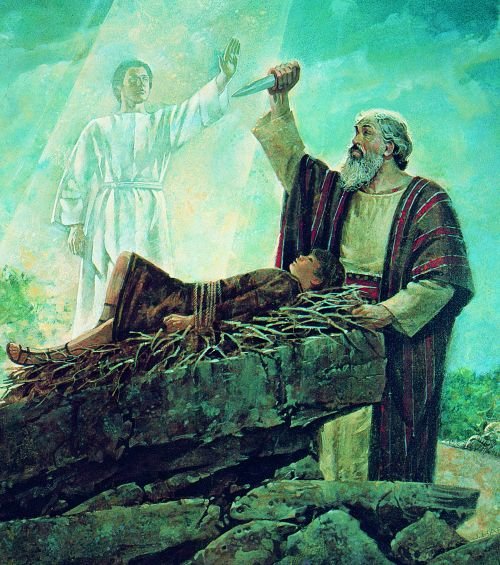
The Resurrection Faith of Abraham

While this would be considered murder in our culture and time, we see Abraham's faith in God's ability to raise the dead to life. In Genesis 22:9 God commanded Abraham to lay his son on the altar as a sacrifice to Him. Being obedient, Abraham laid Isaac on the altar believing that God would raise his son from the dead. God, however, sent an angel to stop Abraham and provided a ram to offer as a sacrifice instead.

Heb 11:19 nlt. Abraham reasoned that if Isaac died, God was able to bring him back to life again. And in a sense, Abraham did receive his son back from the dead.

God's promise to us is that because God raised His Son Jesus Christ from the dead, so that by faith we too shall be raised from the dead. 

That's resurrection faith

Written by Pastor Joyce A. Erickson

Believers Bible School, Founder https://believersbibleschool.com/