Hebrews - Chapter 6 Warnings, Encouragements and Promises from God


The Book of Hebrews
Chapter 6
Hebrews 6:1 Therefore, leaving the discussion of the elementary principles of Christ, let us go on to perfection, not laying again the foundation of repentance from dead works and of faith toward God, 2 of the doctrine of baptisms, of laying on of hands, of resurrection of the dead, and of eternal judgment. 3 And this we will do if God permits.
The Apostle Paul ended the last chapter by chastising the Jewish believers for their immaturity in Christ. They had been hearing the Gospel for many years, professing to be believers in Christ for a lengthy time, but were still immature in their faith. They should have been mature enough to go deeper into the truths of God, as well as they should be teaching others God's truth by this time. They were, however, were still waivering in their own faith, allowing doubt to set in by outside pressures. As such, they were missing out on depths of God's blessings in their lives. He now begins this chapter with "therefore."
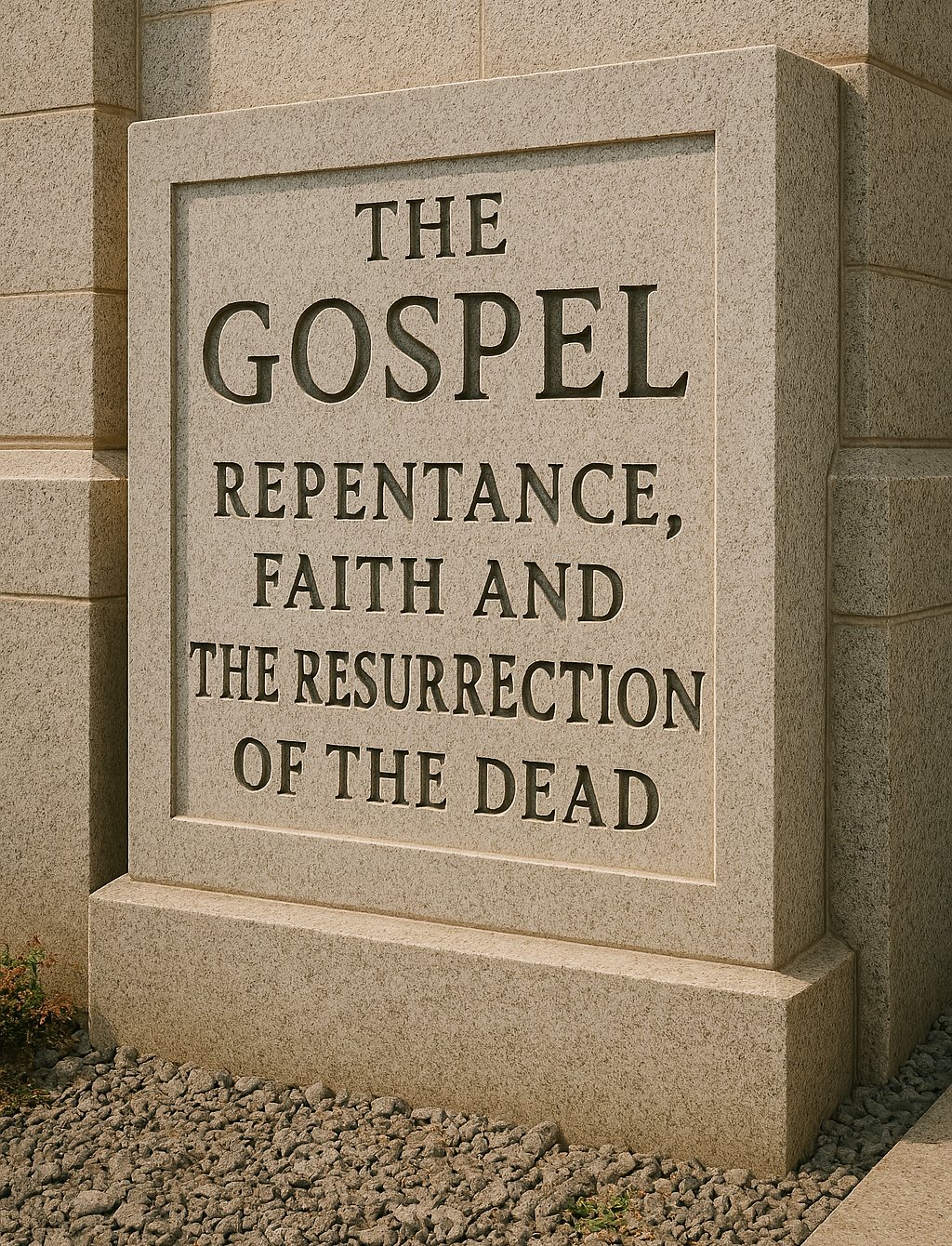
The Gospel: Cornerstone of our Faith
Paul being angry and firm with them, chastices them to grow in their faith and to press on toward maturity. While the Gospel of Jesus Christ is our foundation, and would crumble if we did not live by them, our faith in Jesus, Who He is, and what He has done for us is far more than our foundational truths of Him. He so much wants us to move forward to understand the deeper things of God.
Listed below then are the five elementary teachings of the Old Testament Law and fundamental teachings of Christianity. They were the basic teachings of Judaism and the building blocks of the truths of Christianity.
1. Not laying again the foundation of repentance from dead works and of faith toward God:
- Repentance from one's sin was the base line for all Jews throughout the Old Testament to receive salvation under God. Jews had to come to the point of recognizing their sinful nature and place their belief and trust in God under the Law of Moses.
- Christianity came out of Judaism in that salvation is offered to all mankind where people recognize their sinful nature and place their belief and trust in God's Son Jesus Christ - because Jesus came to fulfill the Law, furthermore our faith and trust must be in Him.
2. The doctrine of baptisms:
Baptisms, meaning "washings" are listed many times in the Old Covenant writings of the Law as a means of washings to become clean or purification. In Christ, believers have been baptized (washed) in Him because of His shed blood on the cross that cleanses us from all sin (I John 1:7)
As Christians, many have a different understandings of the word "baptism," which simply means washings, purification or sanctify. Throughout the Old Testament, there were many washings, rituals or purifications.
- From the Israelites crossing through the Red Sea into freedom.
- If a Jew touched a dead body, they had to go through a washing to enter back into the camp
- A Jewish woman, while menstrating, had to go outside of the camp until the bleeding ended. She then had to go through a washing as a purification rite to go back into the camp and to her husband.
- The High Priest, as a ritual of cleansing himself before entering into the Holy place and the Holy of Holies, had to go through a washing in the laver bowl on the Day of Atonement.
- After the temple was built, all Jews offering sacrifices (with blood) had to wash themselves in the washing founts, called the "Mikkah" outside the temple walls for purification before entering into the temple grounds to offer sacrifices.
- And then came John the Baptist who called for full immersion in water washing for the repentance for sins - for the Kingdom of God was now at hand.
We get the word baptism from John the Baptist. Water cleansing took on a new meaning for those who had accepted Christ as their Messiah. It came to mean identification with Christ and symbolic an inner washing. When someone came to accept Christ, which is a heart decision, then afterward he or she made a public proclamation by being water baptized as being identified with Christ, which had nothing to do with the Jewish purification rites. It was an announcement to everyone that they had become a believer in Christ. That public acknowledgement through water baptism was then granted to them permission to enter into felllowship with other believers.
- Infant baptism came a few hundred years later - but not as a means of salvation for the child, but a promise of parents, as an identification to the church and the world around them that they would raise their child up in the ways of the Lord. That tradition, however, has changed over the years whereas in some churches it is believed that infant baptism saves the child, which is anti-scriptural.
3. The doctrine of laying on of hands:
- Old covenant fathers often said a blessing over their children by the laying on of hands, incurring a passing down of various blessings of the father to the child.
- Various ordinations within the Jewish rituals was done by the laying on of hands, incurring a passing down or giving authority in ministry.
- As believers in Christ, we also trust in leaders, such as pastor or deacons, who have had hands laid upon them to operate in the authority that was given to the Church by the laying on of hands.
4. The resurrection of the dead:
The basic need in man is to live on forever.
The Old Testament believers believed they would be resurrected and have eternal life. They would, however, rest in Abraham's bosom until the time of the resurrection. When Jesus died, He went to Abraham's bosom to set all those who awaited Him and delivered them to Paradise in heaven. All those who did not have faith and trust in God, knowing their Messiah would one day come to save them, stayed in a separate compartment in Sheol (hell).
As New Covenant believers, our Bibles tell us that we must have faith and trust in Jesus, God's Son to go to heaven. At the point of death then, all believers who are absent from the body will be present with the Lord in Paradise. Because God raised Jesus from the dead, we are promised that we too, as believers in Christ, will be raised from the dead unto eternal life with Christ forever.
5. Eternal judgment:
Both Old and New Covenant believers knew there is an eternal judgment to come for all men. Many Old Covenant people understood it to be the obeying of the Laws, which may or may not have included faith and trust in God. They recognized the need to live righteously - for we all will face God's judgment for our actions. Without faith, however, it is impossible to please God.
That is also true for New Testament believers - we must have faith and trust (which includes obedience to His Word) in Jesus Christ in order to be saved. For those who do not believe, rejecting Christ, will be judged by God unto eternal judgment forever.
Under Judaism and Christianity, all six of these element were the cornerstone or elementary functions of how each religion worked.
- Repentance that leads to faith is the foundation of both Judaism and Christianity.
- Baptisms or washings as a means of identification and cleansing is a fundamental part of Judaism and Christianity.
- The Laying on of hands - those in authority over us that lead us in our spiritual life is fundamental teachings of both Old and New Covenant believers.
- All Old and New Covenant believers believe in the Resurrection of the Dead
- All Old and New Covenant believers know there will be an eternal judgment, which is a driving force in both Judaism and Christianity
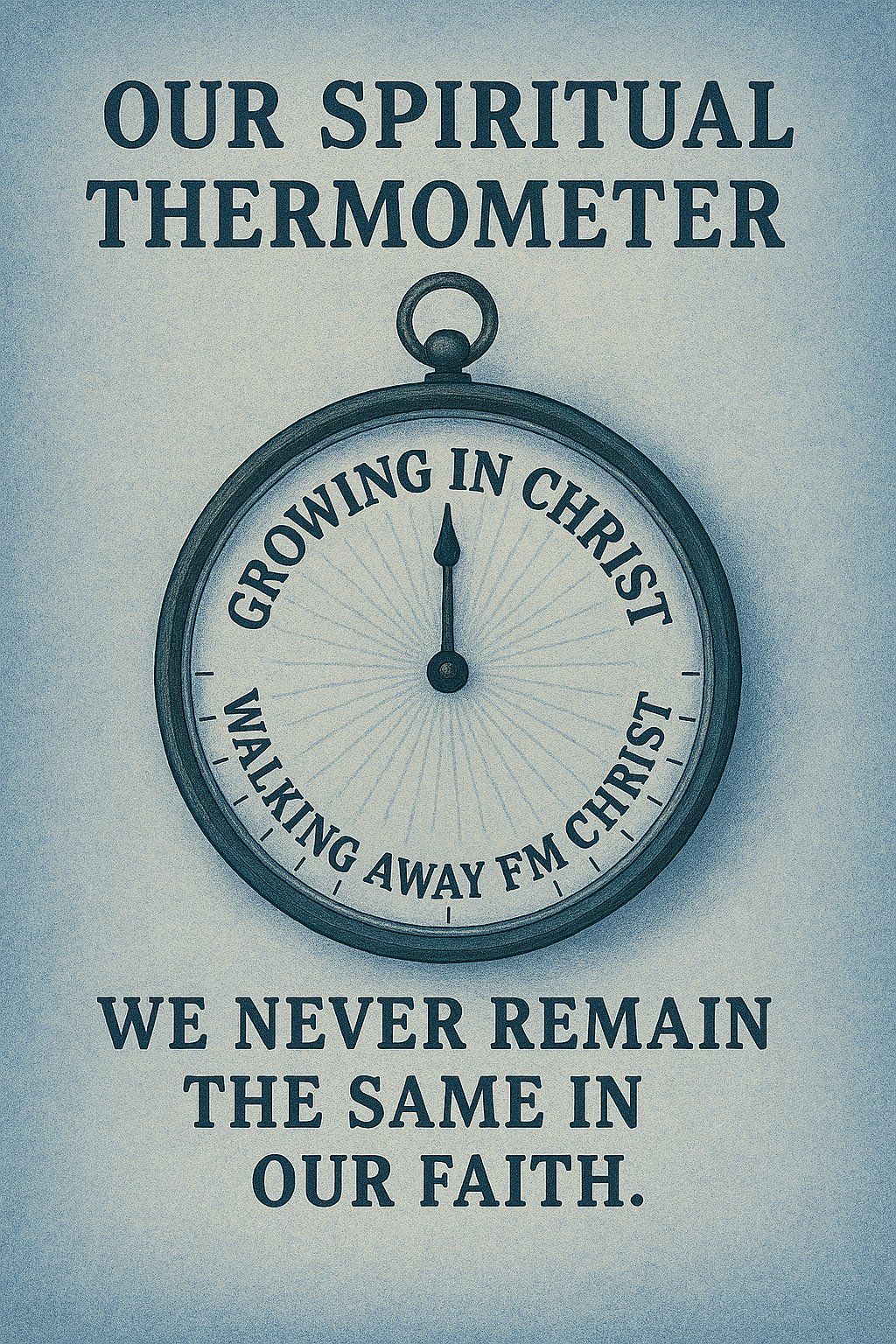
What is Your Spiritual Thermometer?
While God desires for each of us to go into the deeper things in Him, a believer must first understand these basic foundations of faith in order to go further into the deeper truths of God. If an immature believer does not understand these basic truths, he or she will either not understand and eventually dismiss them, place doubts on these truths, or even completely dismiss these truths as lies of the deeper things of God. In order to grow in our faith, we must purpose to get to know God in a deeper way. Otherwise, we risk backsliding in our faith.
Faith is always on the move - it never stands still.
We are either moving closer to God or further away from Him.
4 For it is impossible for those who were once enlightened, and have tasted the heavenly gift, and have become partakers of the Holy Spirit, 5 and have tasted the good word of God and the powers of the age to come, 6 if they fall away, to renew them again to repentance, since they crucify again for themselves the Son of God, and put Him to an open shame.
These three verses have been theological debates over the centuries. To discover God's truth, we must study this section in its own context.
The author of Hebrews is concerned these believers who have been enlightened to know who Jesus is and what He has done for them will return to the Levitical sacrifices as required in the Law of Moses.
- Jesus' atoning death and his elevation to the office of High Priest has brought a transformation of the Law, which then alters the sacrificial system and priesthood.
- No longer was the priesthood, including the High Priest needed, because Jesus is now our High Priest for all times.
- The sacrifices of animals are no longer needed, because Jesus became the One true sacrifice for all times.
- They have tasted the heavenly gift of God's forgiveness.
- They have tasted the goodness of God's Word through the teachings of the apostles of Jesus who were eye witnesses to His life and teachings.
- They have tasted the power of the indwelling Holy Spirit and the operation of His gifts.
When these Jewish believers who have experienced this kind of salvation in such a deep way and they backslide and fall away from faith by no longer trusting in Christ, but go back to the Levitical Law and its sacrifices, it is then is impossible to renew them back to faith in Christ. As such, they are living in continuous sin because they are continuously executing Jesus over and over again on the cross by trusting in their sacrifices for the forgiveness of sin.
Personal Application: How is that we, as Christians today, can take this scripture passage to speak truth to us today?
To backslide in our faith and trust in Jesus is dangerous to our spiritual health. Once we become born-again, trusting in Jesus, we have been enlightened as to God's purpose for sending His Son to save mankind from their sins. We have been set free from the sin and death. As such, we left our former life.
- Jesus' atoning death became the One true sacrifice for all times.
- We have tasted the heavenly gift of God's forgiveness.
- We have tasted the goodness of God's Word through the teachings of the apostles of Jesus who were eye witnesses to His life and teachings.
- We have tasted the power of the indwelling Holy Spirit and the operation of His gifts.
- We have the promise of eternal life with Christ forever.
Because faith is always moving - either forward or backward, we must always be aware of the dangers of backsliding. The end of moving forward in faithfulness brings eternal life; however, the end of moving backward in our faith ultimately brings eternal judgment away from God.
Blaspheme of the Holy Spirit.
The writer is bringing forth the possibility of losing one's eternal salvation in Christ. Here are two false doctrines out there today that have crept into the Church - which denies any possibility of losing one's salvation:
Ulltimate Reconciliation
The belief that the world is getting better all the time, and that all people will grow into reconciliation with God; therefore, no one will go to hell, and everyone will go to heaven.
Reformed Theology
The belief that God picks and chooses who will be saved into eternal reward with Him and who will be damned into hell and the eternal lake of fire for an eternity. Once a person is saved, it is designed by God and impossible for them to lose their eternal salvation. This kind of thinking comes out of the Calvinistic beliefs.
Again, if something bears repeating, it is important to know that it is possible to lose one's salvation. As brought out in chapter 4, there are multiple scripture verses in the New Testament giving us promise of eternal life WHEN we believe and trust in Jesus and what He has done for us. One simple verse is John 3:16.
John 3:16 For God so loved the world, that He gave His only begotten Son,
that whoever believes in Him shall not petrish, but have eternal life.
In this chapter, the author uses multiple examples of the severity of losing one's faith in Christ. He points out that once a person has been saved, having the Holy Spirit dwell within, enjoying the benefits of the Christian life, and chooses to backslide, continuing on that path, the risk is going back to unbelief and the old life before Christ is a definite possibility. When that happens, the heart has become so hardened to Christ to where it is impossible to come back into repentance again. This is what the Bible refers to as the Blaspheme of the Holy Spirit.
Matt 12:31-32 And so I tell you, every kind of sin and slander can be forgiven, but blasphemy against the Spirit will not be forgiven. Anyone who speaks a word against the Son of Man will be forgiven, but anyone who speaks against the Holy Spirit will not be forgiven, either in this age or in the age to come.
This total backslider is then known as an apostate - once saved and fell away. An apostate's unbelief in Christ then forces the Holy Spirit out of his or her heart, and the Bible tells us He can never return. The Holy Spirit is the One Who is so powerful and raises us up to heaven, as such, He cannot dwell within the heart of an unbeliever.
Rom 8:11 But if the Spirit of him that raised up Jesus from the dead dwell in you,
he that raised up Christ from the dead shall also quicken your mortal bodies by his Spirit that dwelleth in you.
An apostate is worse than an unbeliever because an unbeliever can become saved, whereas an apostate's heart becomes so hard to where he or she can never be saved again. There is no forgiveness for someone who dies without faith in Christ. How grievous that is.
Rom 8:9 ESV You, however, are not in the flesh but in the Spirit, if in fact the Spirit of God dwells in you. Anyone who does not have the Spirit of Christ does not belong to him.
Not only does an apostate lose his or her eternal salvation by the very nature of their denial of Christ, they openly and boldly have shamed Christ, whom they once loved, as well as brought shame upon themselves. He or she became short of the promise of eternal life and is doomed to an eternity in the eternal lake of fire.
As long as a person believes, which means trusting and relying upon Jesus (Who He is what He has done for us), eternal life with Him is promised.
7 For the earth which drinks in the rain that often comes upon it, and bears herbs useful for those by whom it is cultivated, receives blessing from God; 8 but if it bears thorns and briers, it is rejected and near to being cursed, whose end is to be burned.
The Apostle Paul uses another example of the severity of backsliding in our faith in Christ, using the example of the lack of rain upon dry ground of herbs. What was once soft tilled soil, yielding lush vegetation, has turned hard and untilled, and no longer able to bring forth its fruit. The only thing that can come forth from this soil is thorns and thistles, which are worthless. Thus the ground has then been cursed and ends up being burned.
Here again is a description of one who had onced accepted Christ, living in trust and reliance upon Him, enjoying the benefits of the Christian life, and then allowed doubt to enter his or her heart. In time, the doubt digressed a healthy heart (soil) until one day the heart turned to unbelief. Eternal life with Christ is then lost and the end result is that person will be burned in the eternal lake of fire.
Encouraged to Remain Strong in the Lord

9 But, beloved, we are confident of better things concerning you, yes, things that accompany salvation, though we speak in this manner. 10 For God is not unjust to forget your work and labor of love which you have shown toward His name, in that you have ministered to the saints, and do minister.
Here in verse 9 we see the word "we," which leads to the possibility that there are multiple authors of the Book of Hebrews. If the author is the Apostle Paul, we do know that this sermon was written from a Roman prison. Timothy was with him in that prison and often the apostle used their traveling partners as their secretary. That then would given even more credence to Paul being the author of this epistle and Timothy his secretary.
The author, now softening up in more of an encouraging voice, calls these Jewish believers "beloved." He states that he (and anyone else with him) are convinced that a better end is for them. Salvation belongs to them, so he is encouraging them to keep up the faith. He reminds them that God is a just God and He hasn't forgotten the love they have had for Him and the work of the ministry that has been brought forth, and is still brought forth in His name by their diligence.
11 And we desire that each one of you show the same diligence to the full assurance of hope until the end, 12 that you do not become sluggish, but imitate those who through faith and patience inherit the promises.
The Apostle Paul then encourages his audience to continue in the same diligence that they have had in the past - to not give up and continue strong in their faith until the end. If they do, they will avoid becoming sluggish in their faith and works, and will, in fact, be just like the patriarchs of ancient times. This, these Jewish believers could understand.
God's Promise to Abraham
13 For when God made a promise to Abraham, because He could swear by no one greater, He swore by Himself, 14 saying, “Surely blessing I will bless you, and multiplying I will multiply you.” 15 And so, after he had patiently endured, he obtained the promise. 16 For men indeed swear by the greater, and an oath for confirmation is for them an end of all dispute.

God made a promise to Abraham over 2000 years prior to this time of writing (62-67 A.D.) that He would give Abraham an inheritance of family for as many as the sands of the sea. Abraham had to wait another 25 years before the promise would begin in his son Isaac. These Jewish believers, 2000 years later, were living proof of that miracle of God. When God promised Abraham, He swore an oath to Himself. Since there was no one greater than Him, He also swore by Himself. God is still fulfilling that promise and will continue that promise even in the age to come.
God's promise to Jewish believers in Christ:
17 Thus God, determining to show more abundantly to the heirs of promise the immutability of His counsel, confirmed it by an oath, 18 that by two immutable things, in which it is impossible for God to lie, we might have strong consolation, who have fled for refuge to lay hold of the hope set before us.
And now God is continuing in that same promise to these Jewish believers that He made with Abraham. God desires, even more to show Abraham's heirs, whom the author is addressing, the unchangeableness of what God's purpose is, meaning He still is carryihng that oath to Abraham in his heirs as they are continuously being multiplied upon the earth.
God's vow is unchangeable - it is continuous. In this, God is proving that He cannot and will not lie. The very promise of His Word makes it impossible for Him to lie.
As a Jew himself, the Apostle Paul takes refuge in what God is doing for the Jewish people. It is a source of encouragement for him. Then he turns it around to encourage these Jewish believers to take hold of that same hope for themselves.
19 This hope we have as an anchor of the soul, both sure and steadfast, and which enters the Presence behind the veil,
This oath that God made to Abraham is continual and a promise that the Jewish nation of people will be forever. That hope is an anchor for their soul to lean on. Because of that, this same hope brought the Jewish people out of Egypt to institute the Mosaic Law and the Torah, which brought them back to God, which eventually led them to Christ.
20 where the forerunner has entered for us, even Jesus, having become High Priest forever according to the order of Melchizedek.
Reminding them again, Melchizedek was the forerunner as high priest of the most High, and now, Jesus has become the High Priest over all of God's people, and He will remain our High Priest forever.
God's Promise to all believers in Christ today
As believers in Christ, whether Jew or Gentile, God's promise is for us believers today as well. Gal 3:29 tells us that in Christ we too are the seed of Abraham and heirs according to the promise. In fact, because of Jesus, we have even better promises. Jesus has obtained a more excellent ministry as our High Priest, being our mediator between God and man, which is now established on even a better covenant than the Old Covenant. One of the better promises given to us in the New Covenant is the indwelling Holy Spirit to comfort, guide, instruct and empower us. Abraham or any Jew under the Old Covenant did not such a promise. In that, we are even more blessed because of Christ Jesus and what He has done for us.
Gal 3:29 And if you are Christ’s, then you are Abraham’s seed, and heirs according to the promise.
Heb 8:6 But now He has obtained a more excellent ministry, inasmuch as He is also Mediator of a better covenant, which was established on better promises.
Believe, trust and obey!


Written by Pastor Joyce A. Erickson
Believers Bible School, Founder https://believersbibleschool.com/