Hebrews - Chapter 3 You are a Royal Priesthood


The Epistle of Hebrews
Chapter 3
The Role of a Jewish High Priest
The last chapter ended by introducing Jesus as our High Priest. To help understand Jesus as our High Priest, let's first of all look at what were the functions of a Jewish high priest.
- Oversaw sacrifices
- Intercessor on behalf of the people
- Offered sacrifices
- Leader over other priests
- Used the Urim and Thummin to determine
God's will in decision making - Maintained holiness
- Leader in civil matters
The Apostle Paul, (probably penned by Timothy) expands his teaching as he goes deeper into what it means for us as believers to have Jesus as our High Priest.
Hebrews 3:1 Therefore, holy brethren, partakers of the heavenly calling, consider the Apostle and High Priest of our confession, Christ Jesus, 2 who was faithful to Him who appointed Him, as Moses also was faithful in all His house.
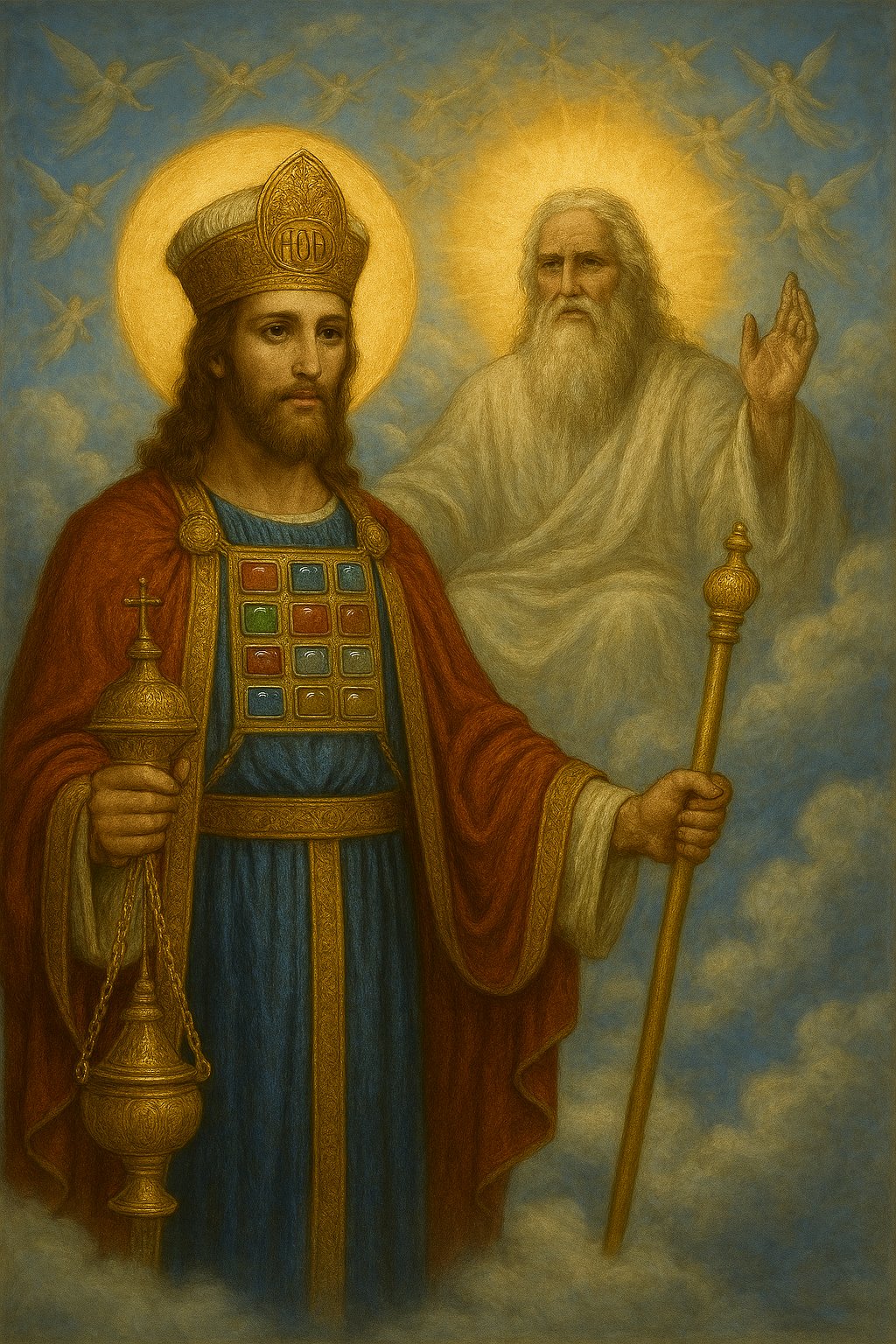
As his Jewish brother to the other Jewish believers in Christ, the Apostle Paul addresses his believing audience as holy, being partakers of the heavenly calling, meaning they are called by God to be set apart from others to be sancified to be made holy. While his original audience were Jewish believers who claimed Jesus as their Messiah, being sanctified by God for Him to do a work of holiness within them, the same applies to all believers in Christ - Jew and Gentile believers alike. You and I as believers in Christ have a calling from God in heaven to make a difference in this world, being sanctified by Him as holy so that we can make a difference to the rest of mankind who dwell upon the earth.
The Apostle Paul is asking these believers in Christ, who claim Jesus as Lord, to consider carefully Jesus as their Apostle and High Priest in the same way Moses was revered and considered faithful in His calling under the Old Covenant.
- While we don't often refer to Jesus as our Apostle, the ancient Greek word for "apostle" means "ambassador." In that sense, Moses was God's ambassador to deliver His people out of bondage in Egypt. The apostle is presenting here with Jesus as God's ambassador sent from heaven to earth with a mission to save mankind.
- In addition, we are called to carefully consider Jesus as our High Priest - in the same way that the High Priest under Moses in the Old Covenant was the supreme leader over God's people - the one who can speak to God on behalf of the people.
Comparing Jesus as our High Priest with the Jewish high priest, we see:
- The Jewish high Priest oversaw the sacrifices. Jesus, however, became our eternal sacrifice by the shedding of His blood on the cross of Calvary.
- The Jewish high priest was the intercessor on behalf of the Jewish people. Jesus because our intercessor to God on behalf of all those who believe and follow Jess.
- The Jewish high priest also offered the sacrifices. Again, Jesus became our eternal sacrifice by the shedding of His blood on the cross of Calvary.
- The Jewish high priest was the leader over other priests. Jesus is our leader - over all believers.
- The Jewish high priest used the Urim and Thummin to determine God's will in decision making. Jesus left a part of Himself with His believers for the Holy Spirit to live within to guide, instruct, teach, comfort and empower us in our decision making.
- The Jewish high priest was required to maintain holiness. Jesus is and was holy without sin. He tells us to be holy as He is holy.
- The Jewish high priest was the leader in civil matters for all Jewish people. Jesus is our leader in all matters of our personal life, including civil matters.
Jesus is more worthy than Moses
3 For this One has been counted worthy of more glory than Moses, inasmuch as He who built the house has more honor than the house. 4 For every house is built by someone, but He who built all things is God. 5 And Moses indeed was faithful in all His house as a servant, for a testimony of those things which would be spoken afterward, 6 but Christ as a Son over His own house, whose house we are if we hold fast the confidence and the rejoicing of the hope firm to the end.
Jesus, our Apostle and High Priest must be considered worthy of even more glory than Moses as Jesus is God, the builder of all things including being the Creator of all mankind. Comparing Jesus to a builder of a house, He is considered even more worthy than the house He built. Every house has a builder, but ultimately, God is the builder of all things; therefore, Jesus, as God's Son, and the second person of the Godhead, is the ultimate builder and Creator of all things.
Remember - all the ancient rabbis considered Moses to be the greatest man ever - even above the angels. All Jews respected and revered their leader Moses as being faithful unto God over His house - meaning the Jewish people all through the Old Covenant. In doing so, Moses led God's people as a servant of God. The Apostle Paul is now claiming that Jesus Christ, as God, is in charge over the House of God - all of God's people – Jew and Gentile alike.
Moses, however, was a servant of God, whereas Jesus is God. As a result, the Apostle Paul is pursuading these Jewish believers to consider Jesus as worthy of even more glory than Moses. Jesus is now the One in charge. As such, they can place their hope in Him, rejoicing until the end.

Remain Faithful
7 Therefore, as the Holy Spirit says: “Today, if you will hear His voice, 8 Do not harden your hearts as in the rebellion, In the day of trial in the wilderness, 9 Where your fathers tested Me, tried Me, And saw My works forty years. 10 Therefore I was angry with that generation, And said, ‘They always go astray in their heart, And they have not known My ways.’ 11 So I swore in My wrath, ‘They shall not enter My rest.’ ”
The Apostle Paul was warning these 1st century Jewish believers in Jerusalem what happened to the Israelites, who were God's people, as they wandered in the wilderness hundreds of years prior. With warning, the author boldly spoke out:
"Today, if you will hear His voice" do not harden your hearts to this truth. Remember what happened in the days when the Israelites wandered in the wilderness..."
That voice is the voice of the indwelling Holy Spirit to guide them into all truth. For the Holy Spirit is telling them “today” to not harden their hearts. Surrender to His leading because His leading is Jesus’ Spirit given to them to follow God’s truth. There is an urgency in the word "today," meaning they (and we must hear and follow today, not tomorrow, or at another time). The Holy Spirit only moves in us to act ''today," for tomorrow, our hearts may become hardened to not hear His voice or tomorrow may never come.
The Apostle was reminding them that their ancestors had the promises that would come from entering Canaan. Instead, they hardened their hearts out of fear. As a result, they wandered for forty years in unbelief. The Holy Spirit called those days “the days of rebellion," claiming they missed their opportunity. As such, they were condemned to die in the wilderness.
The author is now warning these 1st century A.D. believers in Christ who would hear this message that God's wrath was about to come upon the Jewish people who rejected Jesus as their Messiah - the One Who replaced Moses as head over God's people. Sadly, many rejected the authority of Jesus. As a result, their ultimate destruction came about within a few short years (70 A.D.) with the destruction of the temple in Jerusalem where close to one million Jewish people perished.
God had been angry with the Israelites when they refused to believe God to provide when they first had the opportunity to enter into the Promised Land. Out of fear for the giants, they missed their opportunity, and as such died during the 40 years of wandering in the wilderness. This same warning then was applied to these Jewish believers in the 1st century in Jerusalem, as the Apostle Paul was warning them to trust in Jesus as their Apostle and High Priest - the one Who is far above Moses. Most of them refused to listen and obey the voice of the Holy Spirit. As a result, they were destroyed when Rome conquered Jerusalem and burned the temple in 70 A.D.
The Apostle Paul was unaware of the upcoming destruction of the Jewish temple; however, the Holy Spirit knew and was warning the people to put their trust in Jesus and not in Moses and the Law. For those who heeded this warning, following the leading of the Holy Spirit, were probably saved from the destruction of Jerusalem in 70 A.D.
This same warning is also for the Church today. Jesus is calling His people "today." Don't put off what and when Jesus is calling you "today." Harken yourself to His voice and put your trust in Him. As you remain faithful to Christ and His leading, you will then enter into your promised land - heaven - to be with Jesus forever.
Every act of violation or disobedience receives its “just ” punishment
TODAY Believe
12 Beware, brethren, lest there be in any of you an evil heart of unbelief in departing from the living God; 13 but exhort one another daily, while it is called “Today,” lest any of you be hardened through the deceitfulness of sin. 14 For we have become partakers of Christ if we hold the beginning of our confidence steadfast to the end, 15 while it is said: “Today, if you will hear His voice, Do not harden your hearts as in the rebellion.”
(Notice that it says here that all who do not believe is of an evil heart)

The rest of this chapter we will be dealing with the Bible’s definition of belief and unbelief – first in God – then in Christ, along with its consequences.
God doesn't choose who will and who will not believe in Him. He shows Himself and is available to all mankind.
· God shows Himself in nature
· God shows Himself in life
· God shows Himself in our conscience – where our inner man knows there is a God.
Because God has revealed Himself to all mankind, if one refuses to believe in Him is rebelling against God, and thus has an evil heart.
God has always – since time began – looked for a man (or woman) who would believe and follow after Him. God found Enoch, Methuselah, Noah, Abraham, Moses, all the prophets---to lead others to God – so they too would believe and obey God.
So then, I ask the question: Was a mental assent (head belief) in God the only requirement for mankind toward God? Absolutely not! True belief requires obedience to that faith.
Those who followed God did so by believing in Who He is and what He has done for them… as well as were obedient to Him with the actions commanded in the Law. The Law demanded strict obedience to its commandments. That also included listening and obeying the voice of the prophets who spoke to God’s people.For those who disobeyed, such as those who refused to enter into the Promised Land when God commanded – they never entered and died in the wilderness. For that next generation who finally did enter into the Promised Land, but stopped believing and obeying of God’s laws (eventually worshiping other gods/idols)…they too died and paid the penalty of unbelief.
Israel split into two kingdoms – Israel and Judah. As unbelief and disobedience increased, Israel lost its land and the people were taken into exile (slavery) into Assyria and other countries. There they died. One hundred and fifty years later the same thing happened to Judah – they lost their land and were exiled into Babylon for 70 years. Most of them perished in exile. Eventually a small group of Jews went back to their country.
The deterioration of a nation came because of unbelief in God and lack of obedience to God’s laws. When kings who did not believe in God and His Word, that belief was passed to the people and the nation crumbled. When a good king believed and obeyed God, strict measures were taken to tear down idols, the nation thrived and God’s laws were taught throughout the land. Compare this to what is happening in our nation today!
Then God sent a part of Himself, as His Son Jesus to mankind – to live as a man to identify with mankind and the struggles he encounters.
· God showed Himself in Christ as He came to earth as God
· Jesus (as God) showed Himself with signs and wonders
· Jesus (as God) proved Himself through the Scriptures.
· Jesus showed Himself (as God) through prayer
· Jesus showed Him (as God) through those who believed and followed Him.
Jesus came to fulfill the Law, not abolish the Law. The Law still is still meant to be upheld; however, sacrifices for sins committed were no longer necessary because Jesus became our sacrifice through His shed blood and die on the cross for our sins. He became the one-time sacrifice for our sins.
Matt 22:37-39 Love the Lord your God with all your heart, and with all your soul, and with all your mind, followed by the 2nd commandment. Love your neighbor as yourself.
Belief followed by obedience
God’s people still refused to believe and follow God through Christ Jesus. As a result, Israel was again lost in 70 A.D. when Rome attacked and burned the temple. Over 1 million Jews were killed. The rest scattered throughout the world. They had refused to accept Jesus as the one true sacrifice for sins, and as a result God allowed the temple to be destroyed where all sacrifices immediately stopped. For 1900 years Israel was without their country. In 1948 they were granted access (by England) to come back to their land. Sadly, Jesus, as a whole has never been accepted as Israel’s true Messiah. He will, however, be accepted at His 2nd coming when He wars against all nations and sets up His kingdom upon the earth.
Just as Israel was required to believe and obey God, that is what Christ is asking of us…Our faith needs to go deeper in God, meaning our faith and trust (obedience) must now be in Christ Jesus. Not that the Law is no longer valid, which it still is, but we trust in God through Christ Jesus to be faithful to God and His Word.
Matthew 10:38 Then he called the crowd to him along with his disciples and said: “Whoever wants to be my disciple must deny themselves and take up their cross and follow me.”
Jn 10:27-28 My sheep hear my voice, and I know them, and they follow me: And I give unto them eternal life; and they shall never perish, neither shall any man pluck them out of my hand.
Col 3:17 And whatever you do, whether in word or deed, do it all in the name of the Lord Jesus, giving thanks to God the Father through him.
James 2:17 Faith without works is dead.
Most people want to think that "belief" in Jesus is simply believing with our (or intellect) that Jesus is the Son of God.
We become believers in Christ Jesus when we trust in Who Jesus is and what He has done for us. We then become His followers, again by trusting in Him in everything we do and say. Unbelief, on the other hand, is a refusal to believe in Who Jesus is and what He has done for us. Therefore, there can be no trust in Him.
Speaking to the 1st century believers, as well as all believers in Christ, including all Christians even today, unbelief can creep in when we do not heed "today" when the Holy Spirit is talking to us. This is strong language, and we must never underestimate the terrible nature of our unbelief. Refusing to believe God is a serious sin because it shows an evil heart as it keeps departing away from the living God.
"Believe" means to have faith in and trust.
"Unbelieve" means the refusal to trust; therefore, nullifying faith
Christians can truly believe in Christ, but occasionally troubled with doubts here and there, meaning lacking or having a weakness in faith in a particular area. That is where we seek God to help us with our doubts to build up our faith through His Word and in prayer, with the intention of coming to belief. That, however, should only be a temporary situation. Unbelief, on the other hand, isn't a weakness of faith, but the opposite of faith. Unbelief is refusing to have faith, and that is a sin.
To not believe in Christ is to refuse to believe in Him. Therefore, there is no such thing as "I cannot believe," but "I will not believe." That is most certainly a sin, and a hardened heart is a rebellious heart and can never enter into God's rest.
16 For who, having heard, rebelled? Indeed, was it not all who came out of Egypt, led by Moses? 17 Now with whom was He angry forty years? Was it not with those who sinned, whose corpses fell in the wilderness? 18 And to whom did He swear that they would not enter His rest, but to those who did not obey? 19 So we see that they could not enter in because of unbelief.
The Israelites who came out of Egypt rebelled against God. In their rebellion and refusal to believe in God and His provisions, God became angry at them which lasted for 40 years - until their corpses fell and they all laid dead in the desert. Only Joshua and Calab who wanted to enter into the Promised Land survived from that generation were allowed to enter into the Promised Land with the next generation of Israelites who believed and obeyed God.
God means what He says, and He says what He means. For those who refuse to believe and obey God, then and now, will never enter into God's rest. For you can't have true obedience without belief, and a refusal to believe in God and His provisions for us only results in rebellion against God - never to enter into God's rest - in this life and in the next.
"Today," God is harkening His voice to believe and trust in His Son, Who died on the cross and paid the penalty for our sins. "Today," believe and trust, being faithful to the end, and you will enter into God's rest - in this life and the one to come.
Believe and trust in Jesus TODAY!


Written by Pastor Joyce A. Erickson
Believers Bible School, Founder https://believersbibleschool.com/