A Jewish Wedding and the Rapture of the Church
Explaining the blood and bread in the communion elements to an ancient Jewish wedding and the Rapture of the Church.


A Jewish Wedding and the Rapture of the Church
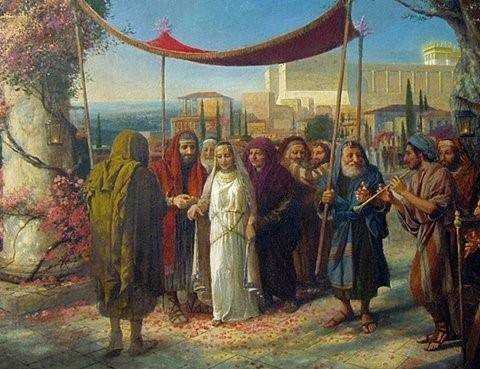
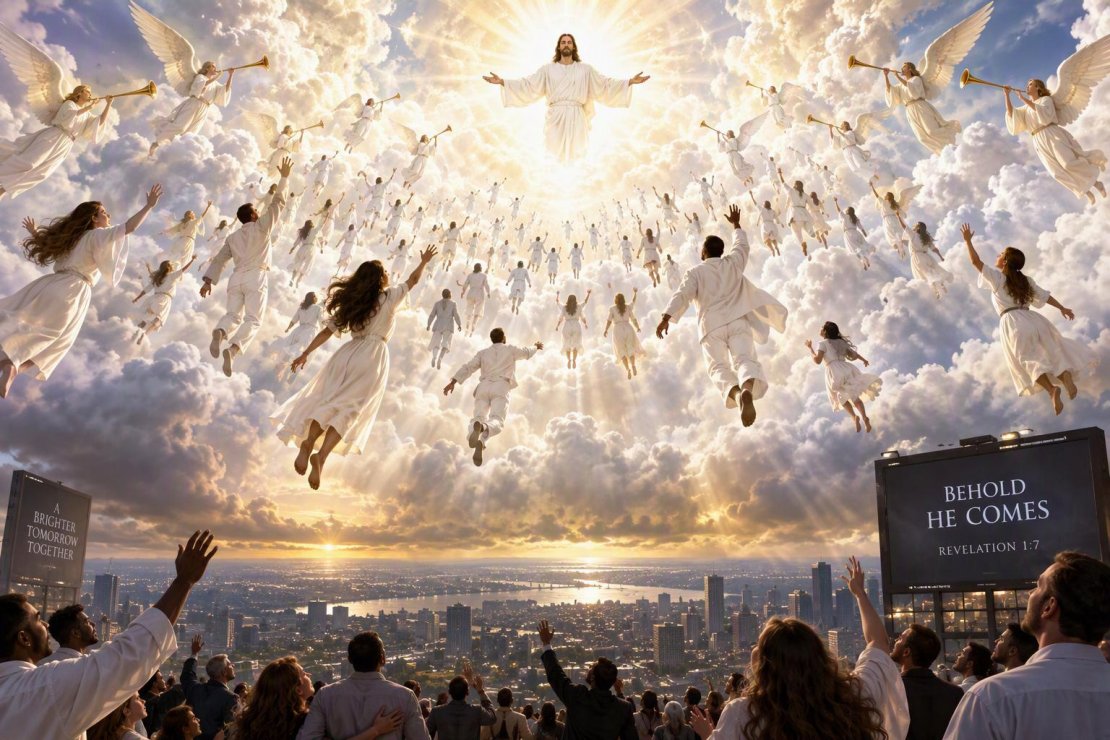
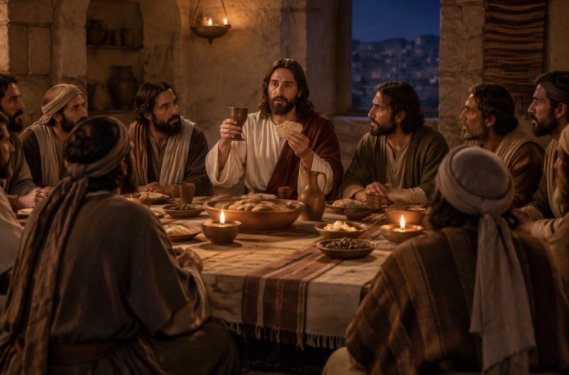
At what we know of as the Last Supper, Jesus gave a promise to His disciples as He took His last meal with them, telling them that He would not eat of the bread nor drink of the fruit of the vine until the kingdom of God would come to them (Luke 22:14-21). In other words, Jesus knew His earthly ministry was almost finished and He would be physically leaving His disciples on earth to go to His Father in heaven. He would not return until the Kingdom of God would come to them - meaning Christ would come back again and they would all be together as one – fully joined together again.
We, too, today, can take that same scripture and apply it to us because many times over in the New Testament we are referred to as the Bride of Christ. We ARE joined to Christ. Just as Jesus promised His disciples that they would be joined together again, we too can take that same scripture and apply it to us today, as the Church is the Body of Christ, and these same promises are given to us. How then can we today, as believers in Christ Jesus, properly understand what Jesus meant when He told His disciples that He would be coming back? We need to look at Jewish customs - more specifically a typical 1st century Jewish wedding to point out the eternal joining together with Christ.
A Marriage Contract
The bridegroom went to the house to meet with the father and mother of the bride he had chosen. A meeting was held with the intention of negotiating a price for His bride and set the conditions of the marriage. The typical price in the 1st century (including the times of the Old Covenant as well) could have been two camels and one ox – a well chosen price for that time. When an agreement was made, a document, in the form of a covenant, was given.
Covenants were serious agreements and binding within the Jewish culture. This covenant was then sealed with a betrothal cup of the fruit of the vine.
As soon as the covenant was written up, the couple was considered married; however, it would not be completed until the time of consummation. According to Jewish custom, a marriage began at the signing of the marriage contract between the bridegroom and the bride’s parents. Rarely did the bride get involved in the choosing and writing of the covenant. The consummation and marriage feast would come later. That period of time could be months or even years later. Generally, however, it took around twelve month.
Today, in our western culture, we would consider this kind of arrangement an engagement period between two consented parties and not binding until the wedding ceremony.
After the completion of the sealing of the marriage covenant, the groom left to then prepare for the new home that he chose for his bride which was generally at or near his father. Set strictly on preparing for his marriage union, the bridegroom purposed to not drink any fruit of the vine again UNTIL after the time of the consummation of his marriage to his bride. He needed to prepare the place of their dwelling. How long that period of time would be depended on the conditions of the contract and the amount preparation time needed to prepare their home.
Before departing, the bridegroom gave his best friend many gifts to give to his bride with which she would need to prepare herself for his coming. Her wardrobe was then created - the finest her bridegroom could offer. Her body was cleansed and she was sprinkled in fine perfume. She did everything necessary to make herself beautiful inside and out for her bridegroom. She purposed to become without spot or blemish as she prepared herself for him. She did not know how long her bridegroom would be gone, but she knew the time would be short, and she had to be ready at any given time.
To help her get ready, the bride gathered several of her unmarried girlfriends (virgins or handmaidens as they were called) to help her with preparations. Day and night they worked to prepare the bride. Their oil lamps needed to be kept well oiled at all times because Jewish weddings were always held at night – sometime after sundown. The bridegroom could come right after the sun went down – early, or even late at night. As such, the bride had to be ready at all times for his coming. We see this example in the parable of the ten virgins
Matt 25:1-13 Then the kingdom of heaven shall be likened to ten virgins who took their lamps and went out to meet the bridegroom. Now five of them were wise and five were foolish. Those who were foolish took their lamps and took no oil with them, but the wise took oil in their vessels with their lamps. And the foolish said to the wise, “give us some of your oil, for our lamps are going out.” But the wise answered, saying “No, lest thee should not be enough for us and you, but to rather to those who seek and buy for yourselves. And while they went to buy, the bridegroom came, and those who were ready went in with him to the wedding; and the door was shut. Afterward, the other virgins came also saying, Lord, Lord, open to us! But he answered and said, Assuredly, I say to you, I do not know you. Watch, therefore, for you know neither the day nor the hour in which the Son of Man is coming.”
When the bridegroom had completed His preparation for their home, he would then come for her. With a big procession, several torches were lit and trumpets were sounded. As the procession got closer to the house of the bride, the noise could be heard and torches seen from a distance. These were the signs of his coming. The virgins who were helping the bride, excitedly hearing and seeing the procession off in the background, had to finish their last minute details. It was critical that their lamps were well oiled because the wedding was about to begin. If they were not prepared, they might get left out when the bridegroom came.
As the signs of his coming drew closer, the bridegroom finally arrived for his bride. With a loud voice he shouted – “COME!” The bride then went outside to join her bridegroom and off the two of them went to consummate their marriage. There, in the bridal chamber, which typically lasted 7 days, the consummation took place. They got to know one another intimately. After that, the wedding feast could begin.
The Terms of Christ's Covenant
Sealing of the covenant
Jesus drank from the fruit of the vine with His disciples and set up the terms of His covenant at that last Passover, stating that His blood paid the price of their union together.
Using this analogy of a Jewish wedding, we have a broader picture of what Christ did for us and how we are to prepare ourselves for His coming. Jesus paid a price for us. The price that Christ paid for us, however, was far greater than two camels and an ox. His price was His blood, which was shed for us on the cross of Calvary. This was His covenant with us.

Jesus Went to His Father's House to Prepare our Heavenly Home
When Jesus sealed the covenant with His blood, He went back to His Father’s house in heaven to prepare a home for His bride – to make it ready for us.
Our eternal home with Christ will be in heaven. When Jesus completes His task of preparation – at the right time - He will come again to receive us unto Himself. But while we await His return, we have been given gifts and have been given the task of preparing ourselves to be ready for Him.

John 14:2-3 In My Father's house are many dwelling places; if it were not so, I would have told you; for I go to prepare a place for you. If I go and prepare a place for you, I will come again and receive you to Myself, that where I am, there you may be also. NASV
The Gift of the Holy Spirit
In the same way that the Jewish bridegroom sent his best friend with gifts to prepare the bride, Jesus sent us His Holy Spirit (which is a part of Himself) ahead of time to give us the gifts we need to prepare for His coming. These gifts are there to help us become holy as Christ is holy. These gifts will help us be obedient to the things of the Lord.
Eph 4:8…And He gave gifts unto men…
Eph 4:11-12 And He Himself gave some to be apostles, some prophets, some evangelists, and some pastors and teachers, for the equipping of the saints for the work of ministry, for the edifying of the body of Christ till we all come to the unity of the faith and the knowledge of the Son of God, to a perfect man, to the measure of the stature of the fullness of Christ.
And then in Ephesians 5:27, the Apostle Paul calls believers the bride of Christ.
Eph 5:27 that He wants to present His bride to Himself glorious, not having spot or wrinkle or any such thing, but that she should be holy and without blemish.
Preparing to Meet Jesus
Our lives need to be daily preparing for Jesus to come to us. We need to be ready at all times. We have seen the signs of His coming – they are visible all around us. Just as the Jewish bridegroom came with torches and sounds, we see the signs of Christ’s coming all around us. …we read the headlines, we look at the news. The time is short – the clock is ticking away. Our bridegroom is almost at our doorstep. When he comes – He will say “COME.” And off we will go to have our marriage consummated.
Just as in a Jewish wedding, the time of the consummation was seven days - an intimate time of getting to know each other. So too, we will be raptured when Jesus comes for us and for the next seven years we will intimately get to know Jesus as He takes us to our new home in heaven.
Then at the end of the seven years, the marriage feast of the Lamb will be observed to celebrate the joining of Jesus to His bride - the Church. What a glorious time that will be.
So, next time you partake of the Lord's supper, keep in mind those words that Jesus said to His first disciples that He will not eat of the bread and drink of the vine until the Kingdom of God comes to us, be mindful of the depth of what He said. Jesus has gone to great lengths to prepare Himself and our eternal home for us, so we need to make sure we are ready for His coming.

Written by Pastor Joyce A. Erickson
Believers Bible School, Founder https://believersbibleschool.com/